
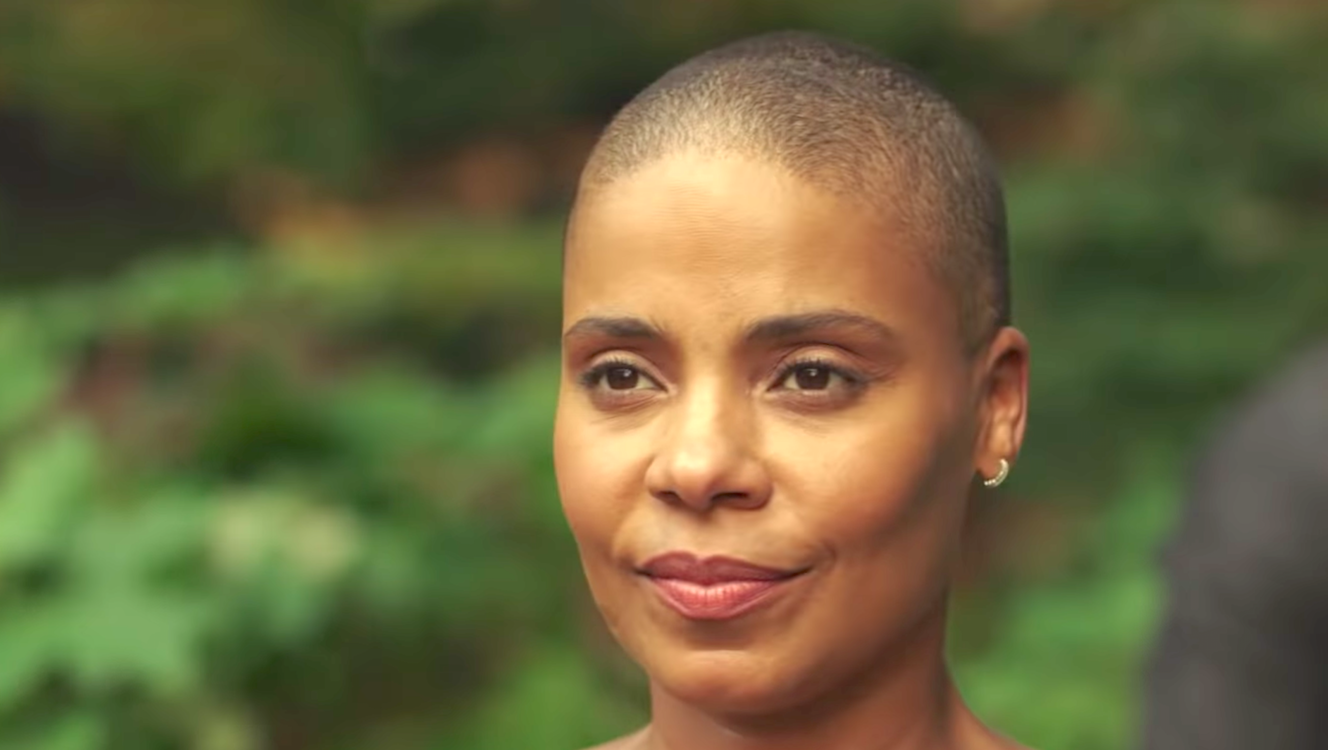
Directed by Haifaa Al-Mansour, Nappily Ever After is the story of an African American woman named Violet, particularly her journey to self-love/acceptance through her relationship with the hair that naturally grows out of her head.
Starring Sanaa Lathan, Lynn Whitfield, Ricky Whittle and Lyriq Bent, I watched this one because I, too, have been on my own journey with my afro hair and wanted to see if Violet’s story reflected mine in any way. The similarities are regarding my experience of some people’s perception of afro hair. Another similarity is my own fantasies and long-term wish for my tightly curled hair to be easier to manage – but without first needing to chemically treat it or actually shave my head.
What I enjoyed most about Nappily Ever After is the self-love and acceptance message. A message worth internalising for every human being, regardless of the hair on their head. In fact, it reminded me of one of my favourite quotes of all time by writer/feminist Audre Lorde… ‘If I didn’t define myself for myself, I would be crunched into other people’s fantasies for me and eaten alive.’
I think overall, the most memorable moment in Nappily Ever After will always be the scene where Violet shaves her head, and all that it meant for her journey.
I only wish that Al-Mansour’s film hadn’t been quite so predictable in parts. Nevertheless, I say watch it if you’re curious enough about this particular self-love journey, and if you just don’t quite get what the big deal about afro hair may be. This movie doesn’t have all the answers, but it’s certainly a start.
Happy Film Loving,
G
 The Movie My Life
More so than other parts of the world, Afro hair is often viewed as a political statement in the United States. Does this movie delve into that?
I’ve seen it and can confirm that it doesn’t. That would probably need to be a whole other film.